

Skip to content
MTK Solution

MTK Energy

An energy accelerator that MTK configures on each client's meter data, for monitoring, forecasting and reporting across sites and assets.

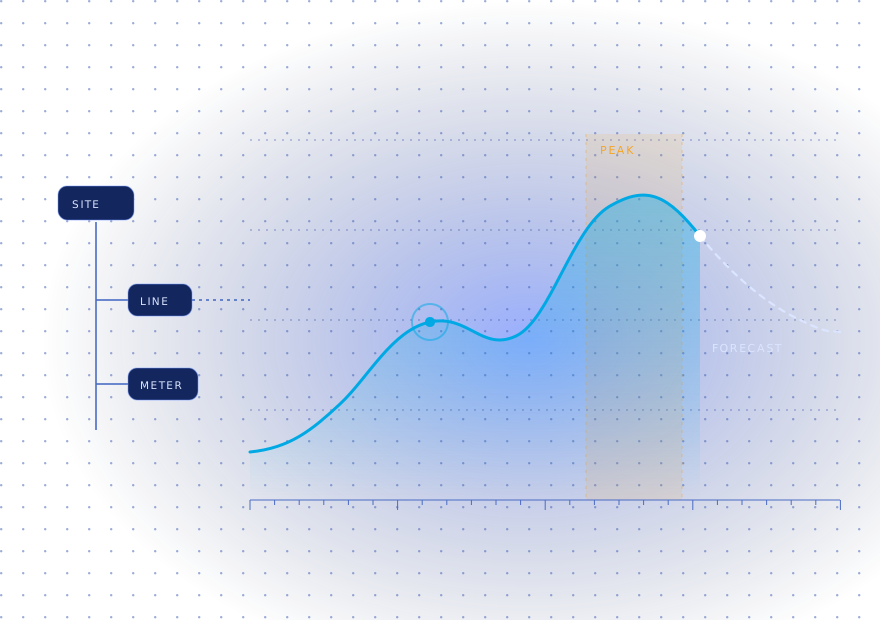
MTK Energy: Site, Line, Meter, Peak, ForecastMTK Energy: Site, Line, Meter, Peak, Forecast

The problem it addresses

Why energy data rarely supports decisions

  • A bill, not a breakdown

    A monthly bill cannot show which line, shift, building or store caused a change in consumption.

  • Reporting duties are growing

    Designated energy users in Vietnam must report consumption and plans each year and complete periodic energy audits.

  • Customers ask for carbon data

    Export buyers and overseas parent companies request energy and emissions figures that trace back to measured data.

In MTK services

MTK Energy across the service lines

MTK Energy across the service lines
Service lineStageHow it is used
AI Strategy & TransformationPlan

Energy KPIs for the roadmap

Energy per unit of output and other reference KPIs give an energy roadmap a tested starting point.

Applied AI & AgentsPilot

An energy pilot

Monitoring or forecasting is piloted on one site's meter data, with consumption measured before and after.

Applied AI & AgentsScale

Rollout across sites

The same model and reports are extended site by site, with each new site added to one comparison.

Cloud & Managed AI OperationsOperate

Ongoing monitoring

Models are retrained as equipment, tariffs and production change, and reports are prepared on the client's schedule.

Components

What MTK brings to an energy project

MTK Energy is assembled for each project from components MTK maintains, then configured on the client's meters and systems.

  • Energy data model

    Sites, meters, lines, equipment and tariffs in one model on MTK Intelligence, linked to production and building data.

  • Monitoring and anomaly detection

    A normal baseline learned for each meter or site, with drift flagged and sites compared with each other.

  • Load forecasting

    Hourly load forecasts that let planners move flexible work away from peak tariff periods.

  • Report templates

    Drafts of energy and emissions reports built from measured data, with each figure traced to its meter or invoice.

Runs on

MTK Intelligence

  • Data foundation
  • Business ontology
  • Governed AI agents

Related use cases

Use cases on MTK Energy

View all use cases
  • MTK Energy

    Load forecasting

    Hourly load forecasts to move flexible work to off-peak periods, measured by electricity cost per time band.

  • MTK Energy

    Energy anomaly detection

    Alerts when consumption departs from a site's normal pattern, measured by alerts resolved and kWh of waste avoided.

  • MTK Energy

    Energy and emissions reporting

    Consumption and emissions reports prepared from measured data, measured by the time each report takes to produce.

Ownership and deployment

What the client owns and where it runs

  • Client ownership

    Meter data, site models, trained forecasts and report configurations belong to the client. MTK components are licensed.

  • In the client's cloud

    Deployed with MTK Intelligence in the client's cloud subscription, next to its production and building data.

    or
  • Managed by MTK

    MTK hosts and operates the solution in an environment it manages, with client data held in its own tenant.

FAQ

Questions about MTK Energy

Why does a services company build an energy accelerator?
Because energy projects repeat the same work: connecting meters, modelling sites and preparing reports. Keeping these components lets each project start from a working base.
Is MTK Energy a ready-made product?
No. It is a set of components that MTK configures on each client's meters, tariffs and sites. Each project starts with one site in the pilot.
Does MTK Energy make our reports compliant?
It prepares report drafts from measured data and keeps the source of each figure. Filing and certified energy audits stay with the client and registered auditors.
What data does an energy project need?

Meter or sub-meter readings, energy invoices and tariff details. Production or occupancy data is added where energy is measured per unit or per area.

An energy pilot on one site

Start with one site's meter data, agree one measure and see the result before rolling out to other sites.